
ART
The Boats That Found Me
Mar 6, 2026
The stadium form came from Gelsenkirchen — from Schalke, from the industrial geometry of the Ruhrpott. But another shape found me in California, and it came from the water.
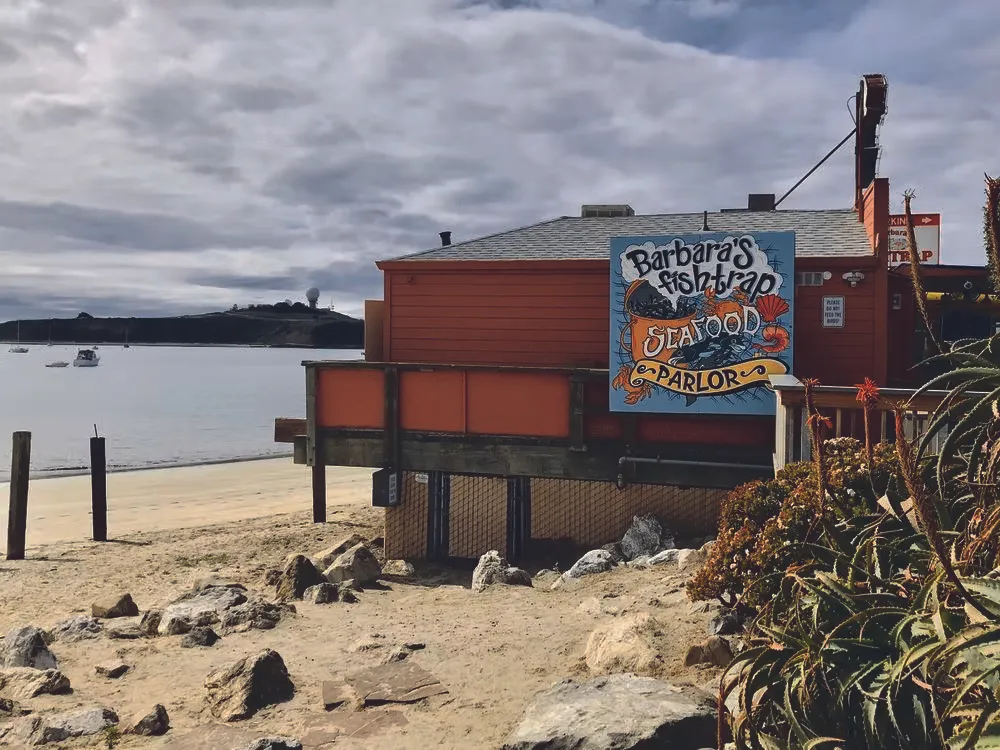
I spent years walking around Princeton Harbor, a working fishing port on the Half Moon Bay coast. My wife surfed at Pillar Point. We'd eat at Barbara's Fish Trap, a red-painted hole in the wall right on the water, then walk the harbor while the afternoon fog rolled in.
A working harbor shows you boats in every state. Some coming in with the catch, some being scraped and painted, some rotting in back lots. And some stripped down to their skeletons — the hull planking gone, only the keel and ribs remaining. A boat carcass looks like a fish carcass. Spine and bones, the structure laid bare.
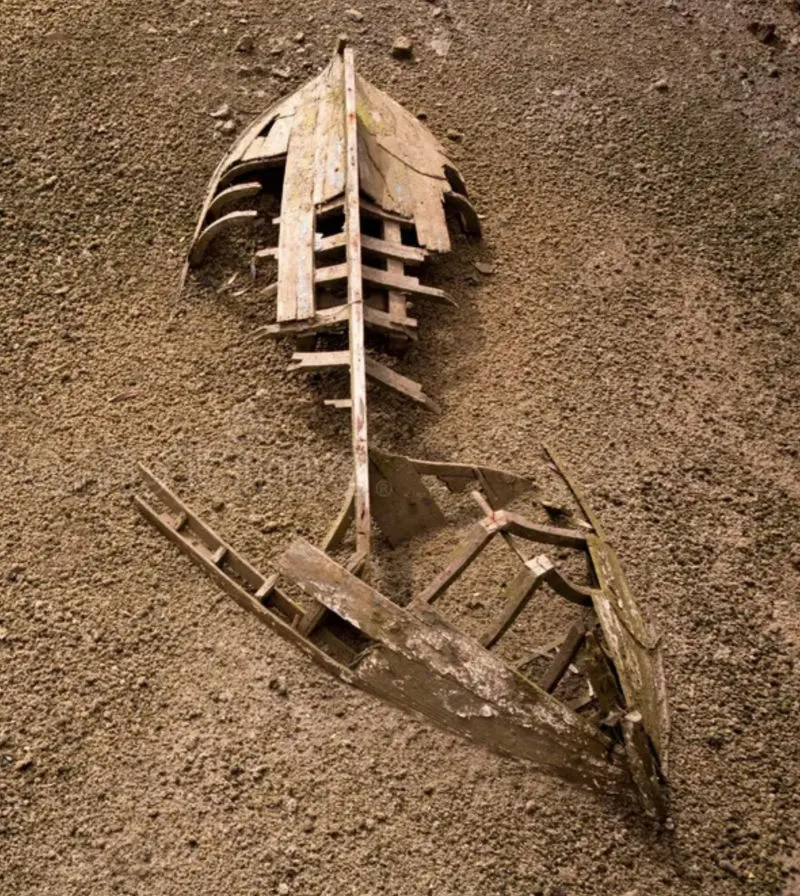
That form got into me the way the stadium form did in Gelsenkirchen — not through conscious decision, but through repeated seeing. I started building boats out of sticks and wire, not planning to, just finding myself there.
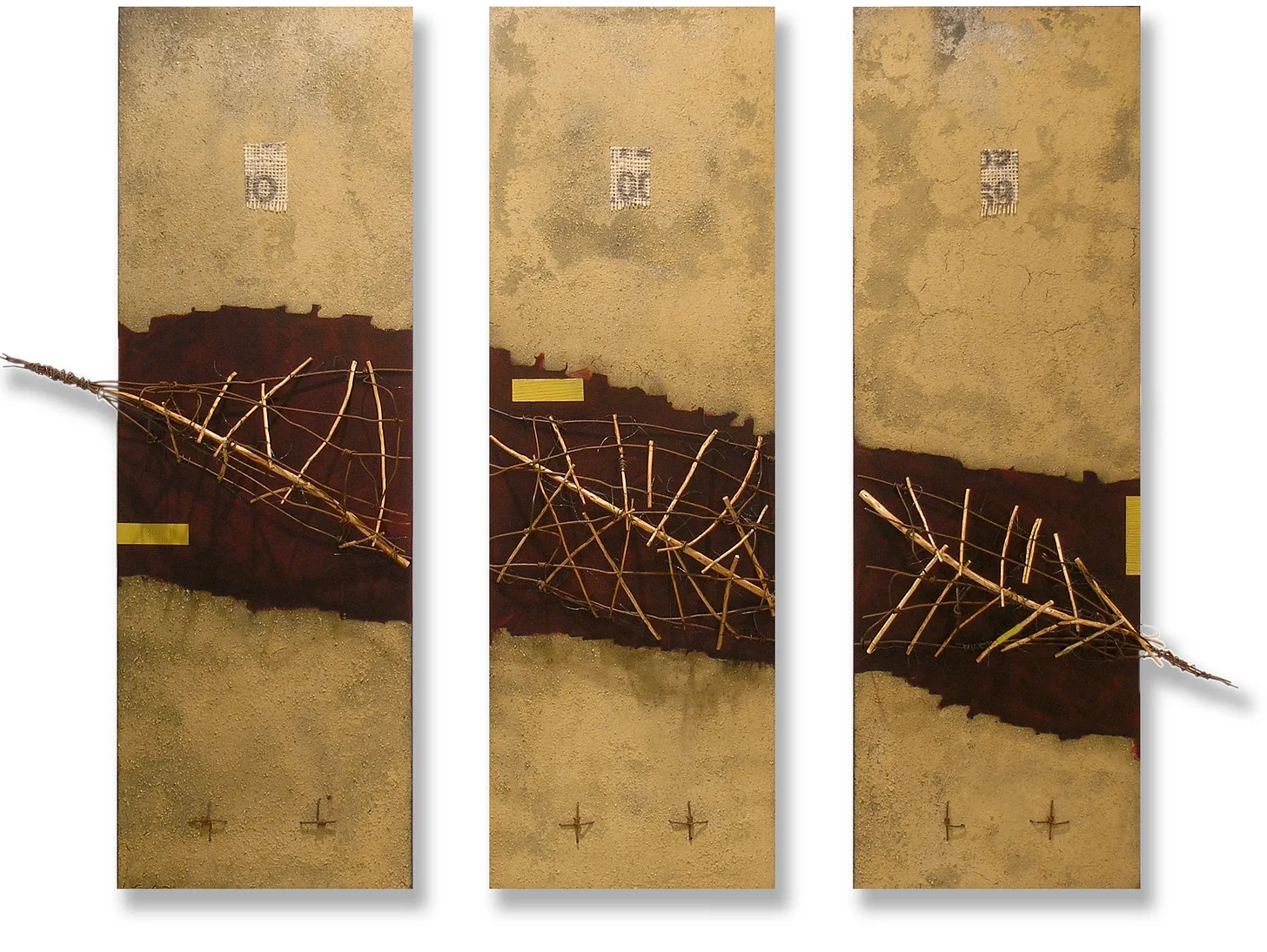
This piece stretches a redwood stick boat skeleton across three panels, crossing a dark red channel. The boat refuses to stay contained in any single frame. It's in transit, moving through.
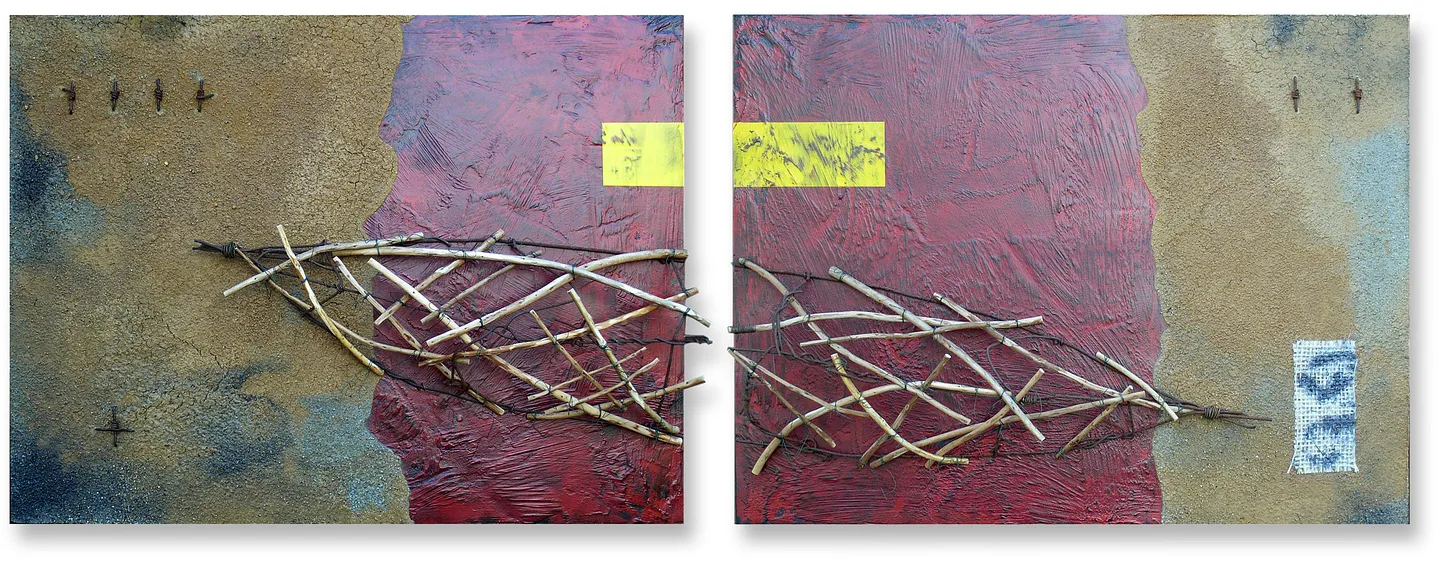
This one pushes the same idea further — two panels, the boat bridging the gap between them. The red is thicker here, more visceral. The yellow rectangles and small grid patch interrupt the flow, the way a single blue stick interrupted the chicken wire circle years earlier. Small choices that keep things alive.
The sticks in these pieces aren't bamboo. They're redwood, gathered after storms on Kings Mountain in the Santa Cruz range. The roads would be littered with fallen branches, the outer bark split and easily removable. I'd collect the naked inner sticks and stockpile them in the studio.
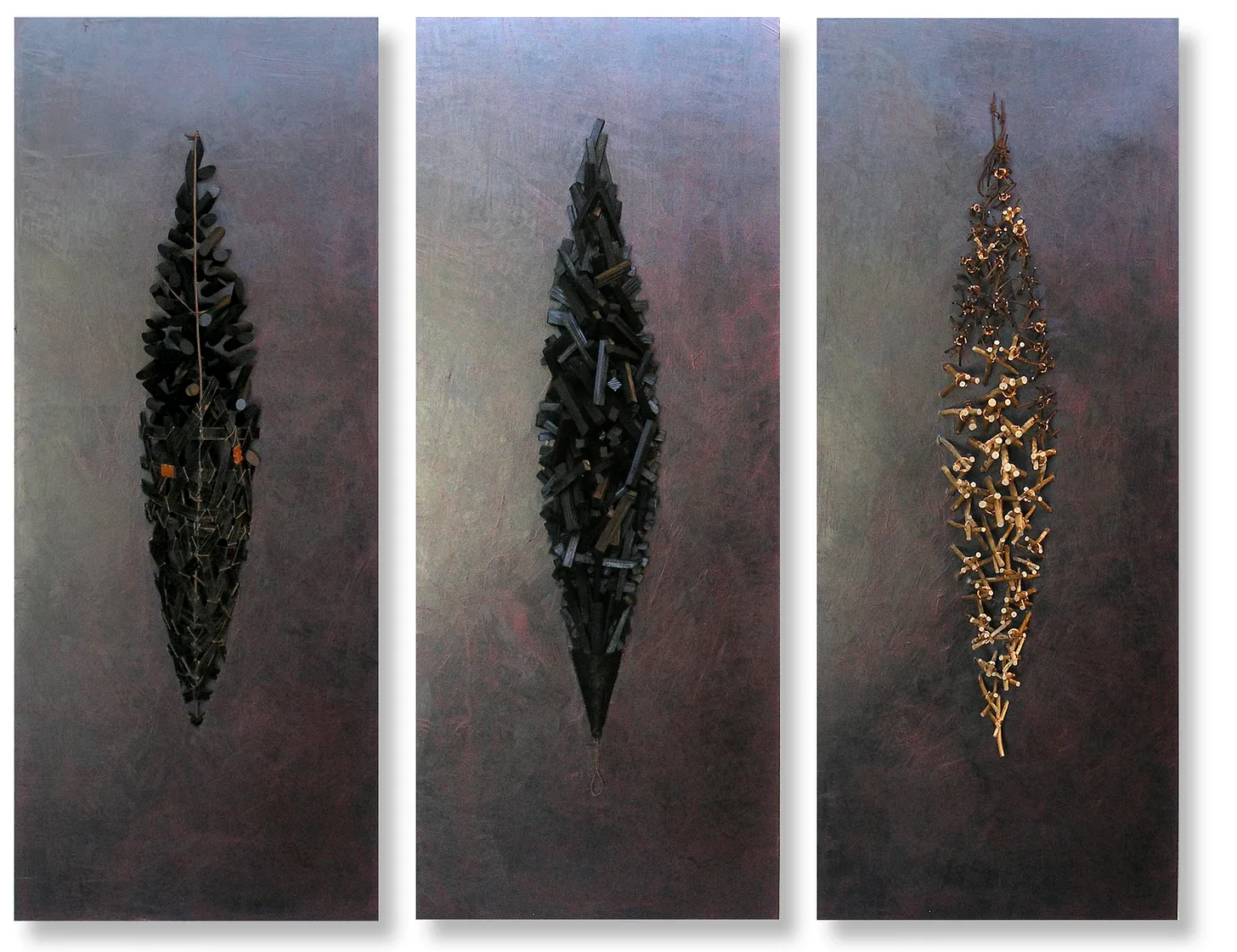
This triptych shows three boats, the same form, different materials. The left one — now in the permanent collection of the Peninsula Museum of Art — uses weathered-steel banding on the lower half and round dowels on top, bound by a spine of rusty wire. The middle is black-painted pine, the densest and most opaque of the three. The right uses redwood sticks below and rusty fencing wire above.
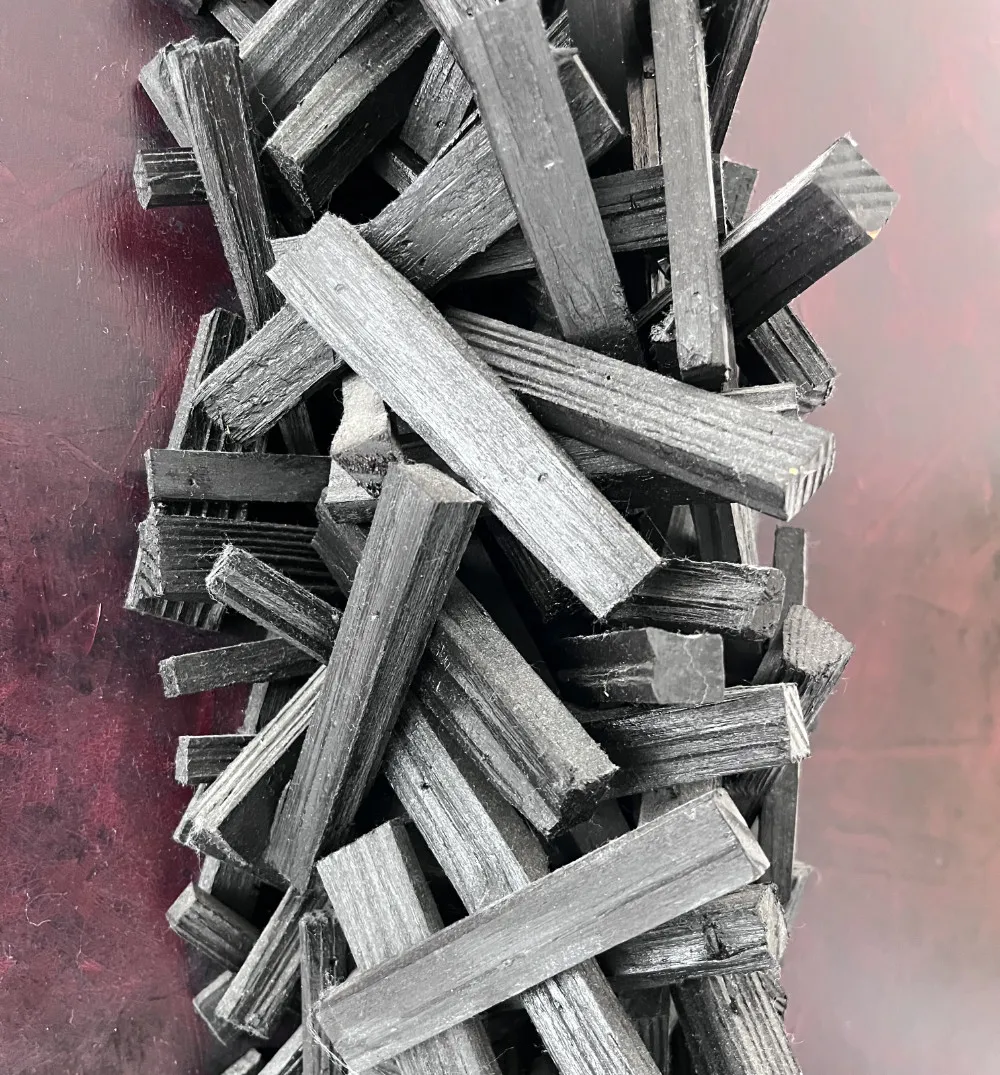
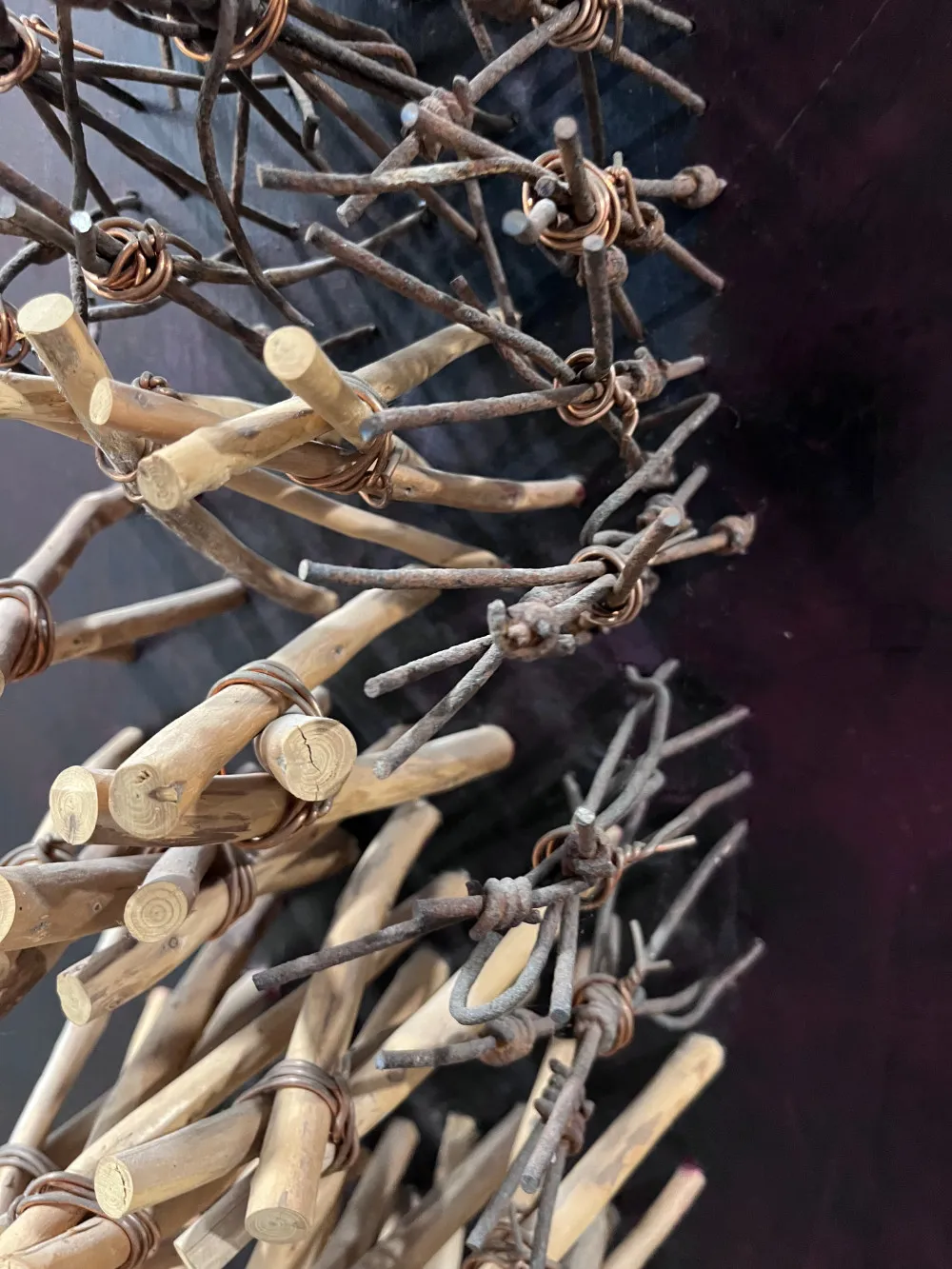
Three boats, three material languages, three degrees of transparency. The wire version is almost all air. The dowel version is semi-open. The black pine is nearly solid. Together they read as a progression, though which direction, construction or decay, is up to the viewer.
The rust mattered as much as the form. Rusty steel banding, rusty fence wire, the patina of age on everything. It reminded me of something.
Growing up in the Ruhrpott, rust was everywhere — the abandoned pit heads, the decommissioned steel plants, the infrastructure of an industry winding down. I didn't think of it as beautiful then. It was just the texture of the world. But walking around Princeton Harbor decades later, seeing the same colors on the fishing boats and old equipment, something connected. The California coast gave me back a piece of home I didn't know I was looking for.
And then it was gone. Life intervened — career demands, a cross-country move. I closed the California studio. In the move to Minnesota, the stockpile of redwood sticks didn't make it. The rusty fence wire from Kings Mountain, the steel banding I'd collected — all of it left behind or lost.
The boat pieces I kept are finite now. Whatever I made with those materials is all there will ever be. The triptych in the museum collection will outlast me. The two I kept hold too many memories to sell.
I'm working in Minneapolis now, with cardboard and paper clay. Different materials, different landscape. The city doesn't offer fallen fences and storm debris the way the mountains did. But the forms persist — the stadium shape, the circle, and somewhere in the future, maybe the boat again. Built from whatever Minneapolis decides to give me.
Also available on Substack.