
A Talisman Against Fascism — In Loring Park
Apr 18, 2026
I grew up in Gelsenkirchen, in Germany's Ruhr Valley, surrounded by the remnants of an industrial world that was already dying. Coal mines closing, steelworks going silent, neighborhoods hollowing out. I watched what happens when the economic floor drops out from under a community. People don't just lose jobs. They lose the places where they used to see each other — the pubs, the clubs, the shared spaces where you were just a person among other people. When those places disappear, something corrosive fills the vacuum. Resentment. Suspicion of outsiders. The convenient lie that someone else is to blame.
I've been living in the United States since the 1980s, long enough to know that this pattern isn't unique to the Ruhr. It's playing out right now, right here, amplified by politicians who have figured out that frightened, isolated people are easy to mobilize. The anti-immigrant rhetoric, the attacks on anything that smells like diversity or inclusion, the sneering at communities that dare to be multilingual, multiethnic, open — all of it is designed to keep people apart. Divide and conquer isn't a metaphor. It's a strategy.
I'm writing this because I've found an antidote. Not a theory, not a policy paper — an actual place where the strategy fails.
A Folk School in Minneapolis
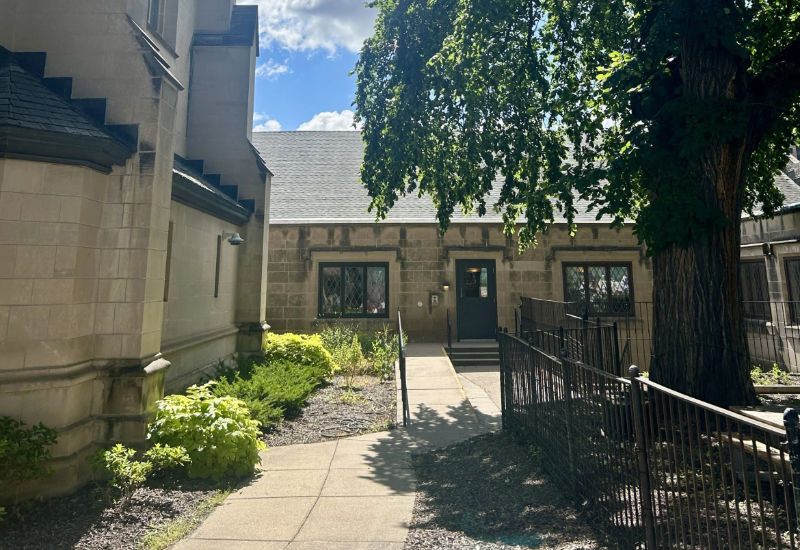
The Center for People and Craft is an emerging urban folk school in the Loring Park neighborhood of Minneapolis, housed in the education building of St. Mark's Episcopal Cathedral. It opened its doors in late 2025, supported by a Vibrant Storefronts award from the City of Minneapolis' Arts and Cultural Affairs Department. Its founding director, Anna Lindall, is an educator and cultural organizer who previously founded Free Forest School, a grassroots initiative that grew into a national nonprofit serving over 70,000 families.
The Center's vision is rooted in a specific historical model: the Danish folk school, or folkehøjskole, developed by N.F.S. Grundtvig in the 1850s. Denmark was transitioning from monarchy to democracy, and Grundtvig saw that the country needed more than political structures — it needed a culture capable of sustaining them. His folk schools rejected nationalism. Instead, they promoted what he called folkelighed — roughly translated as "peopleness" — a pride in one's own culture, language, and stories that carried no sense of cultural superiority. The folk school model was, in the Center's own words, "a talisman against fascism."
That phrase should stop you cold. It stopped me. Because here we are, nearly two centuries later, and the need for that talisman has not gone away. If anything, it's more urgent.
What Happens Inside
Look at the class roster and you'll understand what the Center is doing without anyone having to explain it:
Mazinigwaadan — Ojibwe beadwork. Sashiko — traditional Japanese embroidery. Milagros Mexicanos. Kolrosing — Nordic knife carving. Appalachian clogging. Tamale-making as communal nourishment. Willow basketry. Natural dyeing with marigold. A class called "Pockets, Patches and the Politics of Keeping Things."
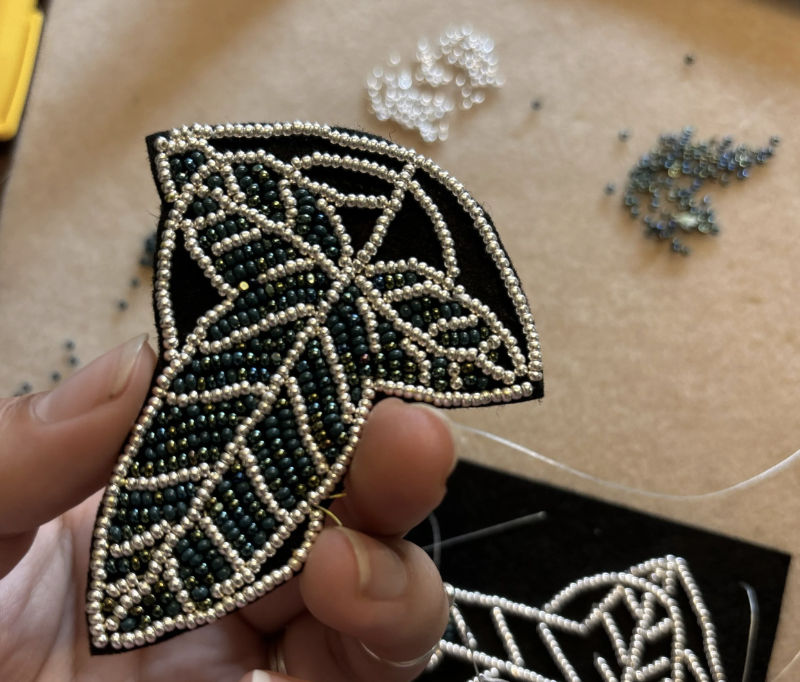
Mazinigwaadan — Ojibwe beadwork
These traditions come from different continents, different centuries, different circumstances. But in the Center's classrooms, they sit side by side. An Ojibwe beading instructor and a Scandinavian carving teacher share the same building, and their students pass each other in the hallway. Nobody fills out a diversity survey. Nobody attends a sensitivity training. People just sit next to each other, work with their hands, and learn something about where the person beside them comes from.
This is what genuine cross-cultural connection looks like. Not the corporate DEI that has become such an easy target for right-wing mockery — the kind that reduces human complexity to checkboxes and compliance metrics — but the real thing. Person to person. Hand to hand. You learn someone's tradition, and suddenly they're not an abstraction anymore. They're not "the immigrant" or "the other." They're the woman who showed you how to hold the needle.
Why This Matters Now
We're living through a political moment that feeds on isolation. MAGA rhetoric works best when people don't actually know their neighbors, when communities are fragmented enough that fear can fill the gaps. The anti-immigrant propaganda, the gutting of DEI programs, the defunding of arts and cultural initiatives — none of this is accidental. It's a systematic effort to destroy exactly the kind of spaces where people discover that they have more in common than they've been told.
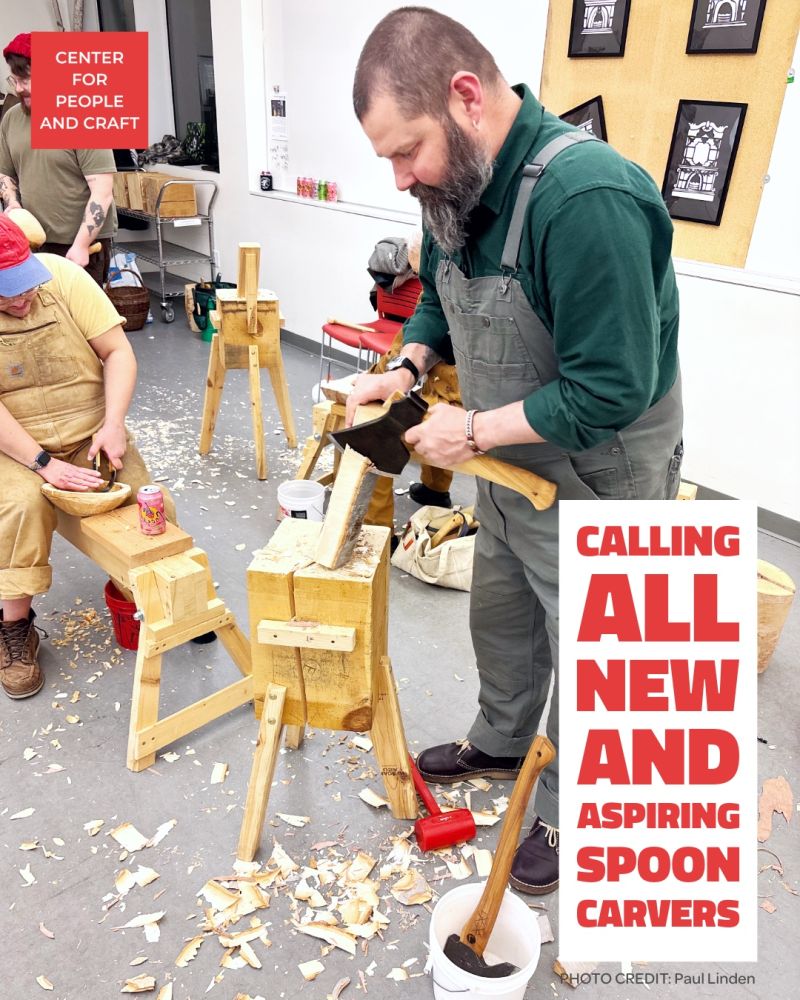
The Center for People and Craft is a direct counter to that effort. Not because it's political — it isn't, not in the partisan sense. It's counter to that effort because it does the one thing authoritarian movements cannot survive: it brings people together without hierarchy, without gatekeeping, without requiring anyone to pass an ideological test. You show up. You make something. You share a meal catered by local immigrant-owned restaurants. You help plane and finish a communal work table. That's it. That's the revolution.
Grundtvig understood this in the 1850s. Anna Lindall understands it now. The folk school model works because it addresses the root problem, not the symptoms. The root problem isn't that people disagree about politics. It's that people have lost the spaces where they can simply be together, where shared experience creates bonds that no demagogue can easily sever.
Between Two Worlds
I have my art studio at the Center. I volunteer there. I am, in the language I've used to describe my own life for decades, a person living between two worlds — the Germany I came from and the America I came to. I've spent my career moving between disciplines too, from engineering to marketing to web development to sculpture. I know something about what it means to carry multiple identities and to find that the spaces where all of them can coexist are rarer than they should be.
The Center is one of those spaces. When I'm working on an assemblage — industrial metal banding, salvaged wood, the materials of the Ruhr Valley reimagined in Minneapolis — I'm a few rooms away from someone learning to bead in the Ojibwe tradition, or someone stitching Sashiko patterns, or someone shaping a willow basket. We are all doing the same fundamental thing: making something with our hands, connecting to a tradition, being present with other human beings. The differences between us are real and worth honoring. But in that building, they are not barriers.
Anna Lindall has spoken about the arrival of AI as another reason the Center matters now — that we need to keep working with our hands, keep our cultural traditions alive, keep thinking for ourselves. I've written extensively about AI's economic impact, and I share her concern. But what strikes me most about the Center is simpler than that. It's a place where you look up from your work and see someone else looking up from theirs, and you nod, and maybe you ask what they're making, and a conversation starts that wouldn't have happened anywhere else in your life.
That's not a small thing. In a country that is being deliberately fractured along lines of race, ethnicity, language, and origin, it might be the most important thing.
Built By Hand
The Center for People and Craft is not a finished institution. It's volunteer-driven, community-funded, still raising money for basic tools and furniture. They're working toward 501(c)(3) status. The building itself has been cleaned, painted, and furnished by the people who believe in what it can become. The work tables were built by community members.
There is something fitting about that. A folk school should be built the way folk traditions are transmitted — person to person, hand to hand, without waiting for permission from above. The Center exists because people decided it should exist and then showed up to make it real.
If you're in Minneapolis, show up. Take a class. Volunteer. Bring a dish to the next potluck. If you're not in Minneapolis, consider what a folk school might look like in your own community. The model is nearly two hundred years old and it still works, because the human need it addresses — the need to gather, to make, to learn from each other without fear — doesn't change.
Grundtvig imagined his folk schools as a bulwark against the authoritarianism of his time. We need to build ours against the authoritarianism of our own.
The Center for People and Craft is located at 519 Oak Grove Street, Minneapolis, MN 55403, adjacent to Loring Park. Visit peopleandcraft.org or find them on Instagram at @centerforpeopleandcraft.