
Studio Notes
Heavy
Last winter this room was almost empty. One rolling cart, a couple of trays, a window full of bare branches. I said I'd post notes as the work developed. The work developed. The shelves filled, the bench filled, pieces went up on the wall.
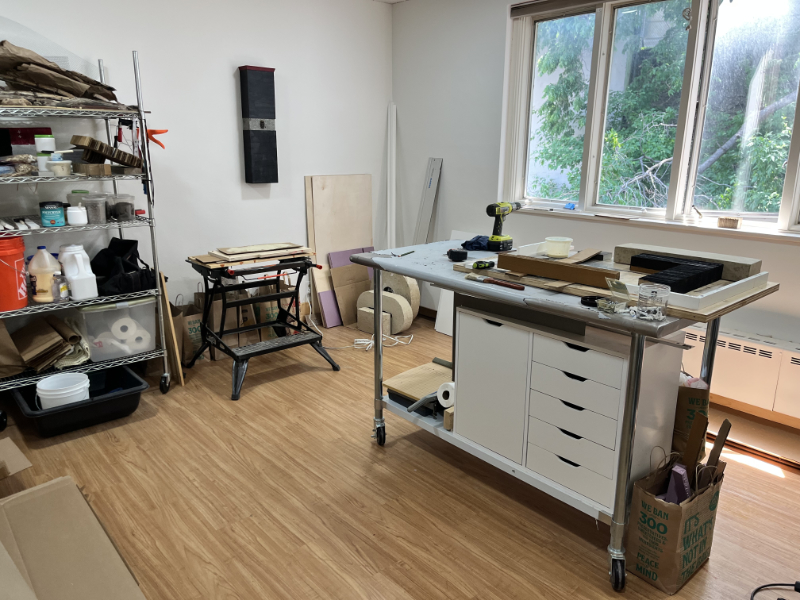
Most of what I've been chasing since comes down to one word. Weight.
Cardboard has no weight to speak of. You flatten it, you set it at the curb, the wind takes it down the street. And there is no end to it. Every recycling day, the drive to the studio reminds me I'll have raw material for as long as I want. We order, it ships, the box comes apart. The most disposable thing there is.
So the question I keep working is simple. How do you take the most thrown-away material in the room and make it look heavy.
The answer is in the edge. I've shown that part before - cut it, stack it, and the corrugated edge that hid inside the box comes to the surface. That gets you volume. Weight is the next step.
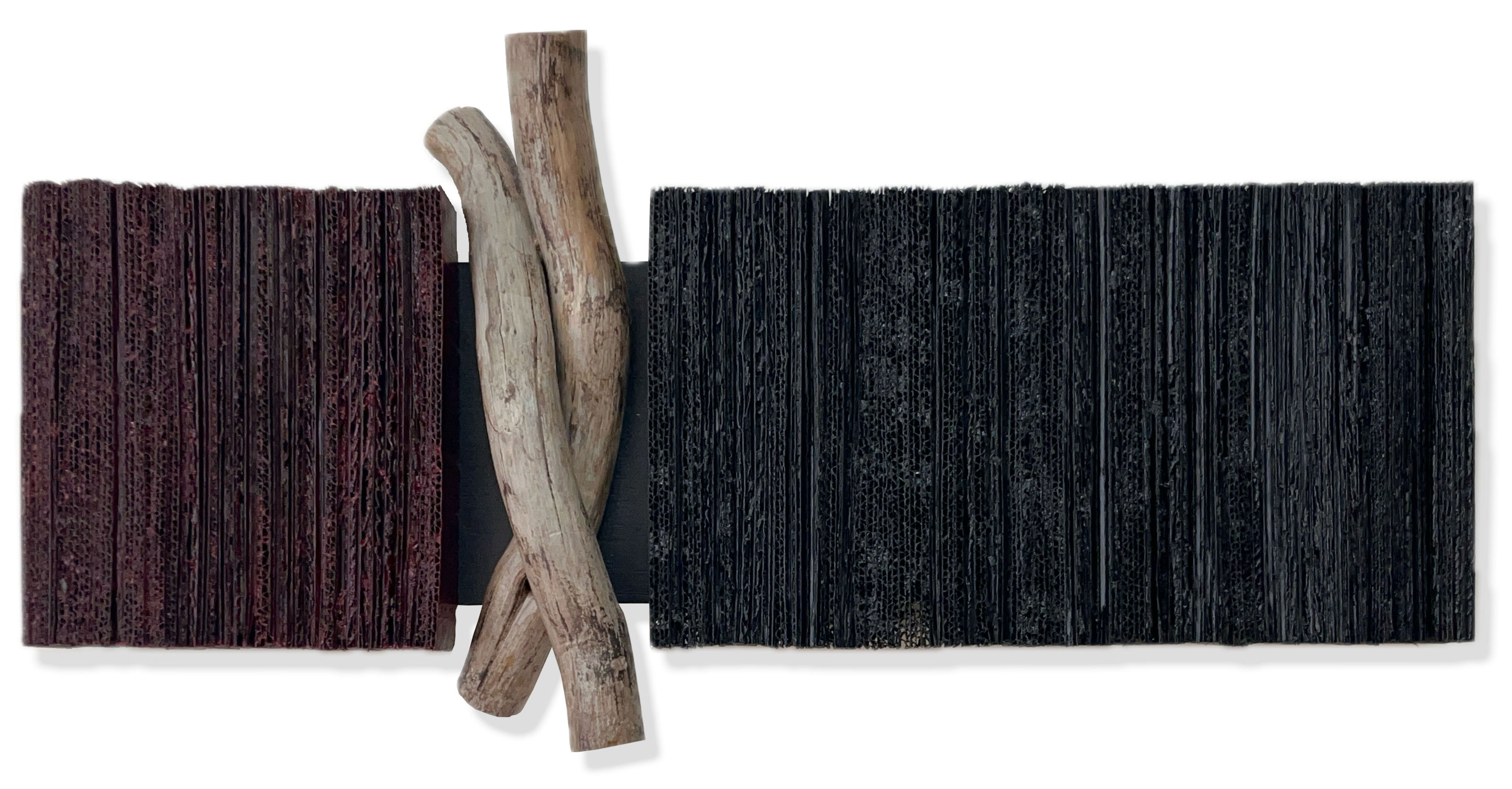
Stack it deep and paint it dark, and the channels fill with shadow. The surface stops reading as texture and starts reading as density. Not a panel with a pattern on it. A block of something solid - stone, or the end of a sawn beam. These two slabs weigh almost nothing. They read as mass. The driftwood in between holds the eye at the center.
That piece fakes the weight one way. The next one fakes it two.
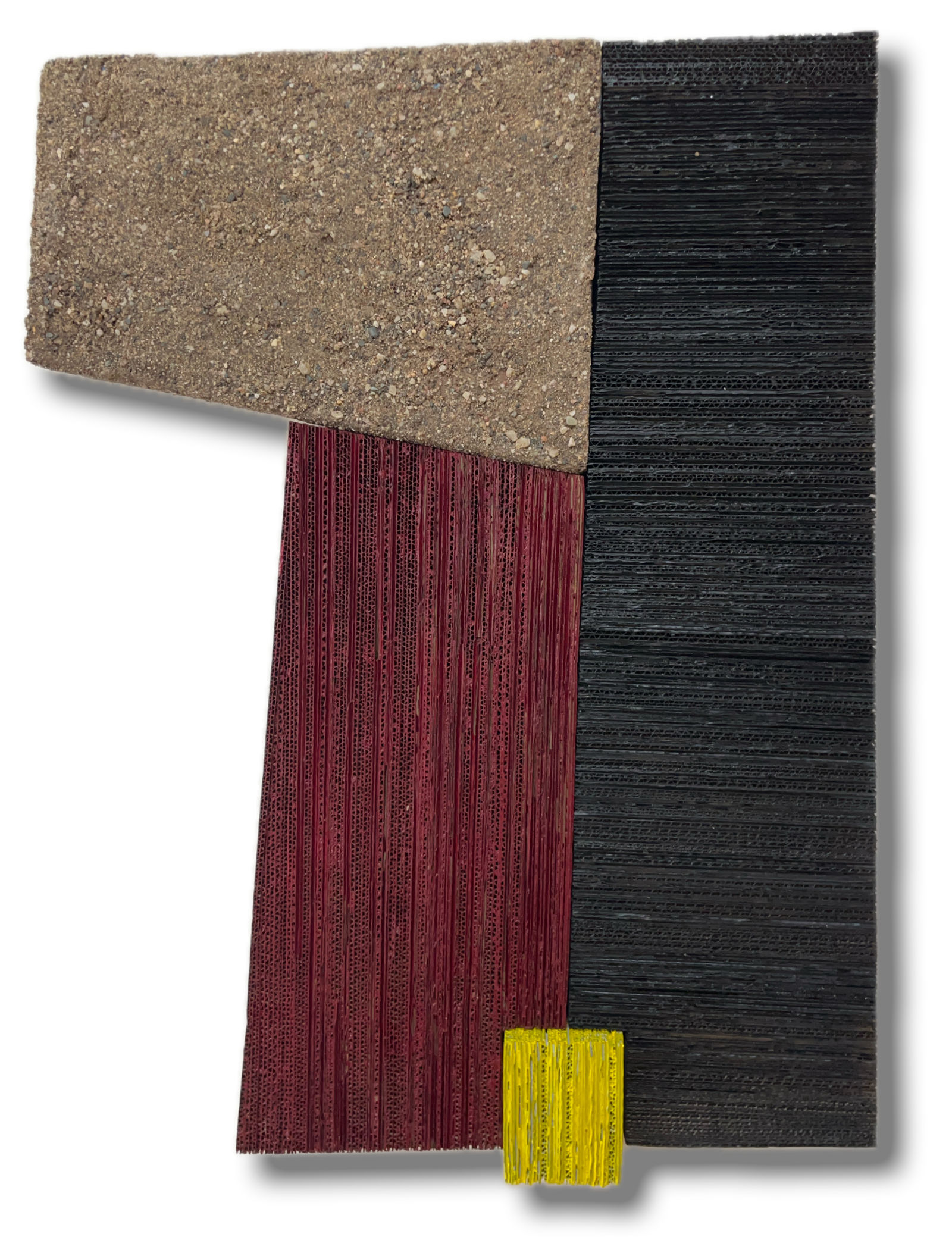
The block at the top left reads as sand and aggregate in a binder. The sand is real. The block is not. It is a cardboard box with sand glued to the surface, somewhat heavier than the slabs but a box all the same. So the cut edge passes for stone and the sand face passes for concrete. Two disguises, one material. Not one part weighs what it claims.